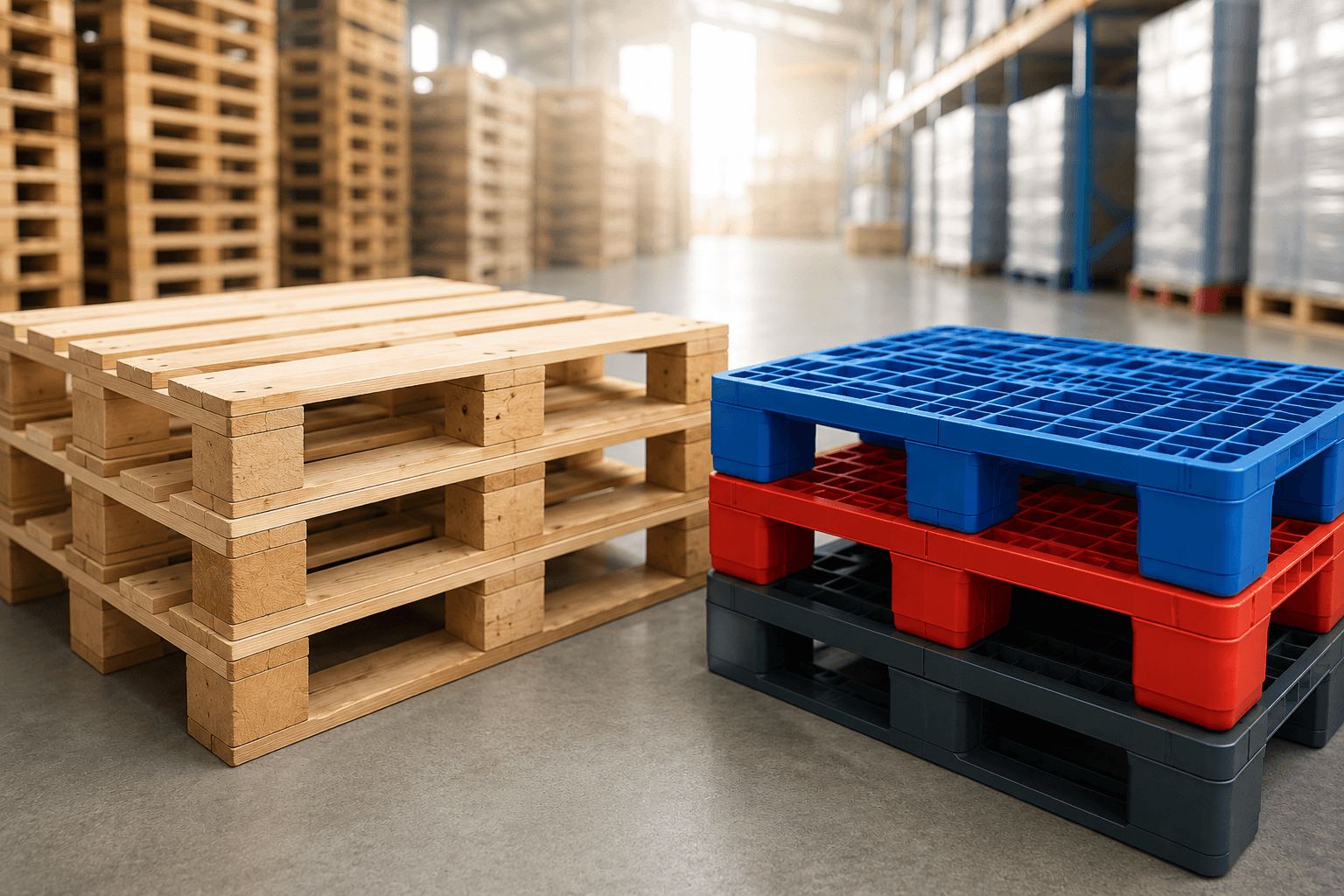
The question comes up in almost every discussion with our industrial clients: should you choose wood or plastic pallets? The answer depends less on a general preference than on your industry, the destination of your goods, and your hygiene or export requirements.
Wood: versatility and controlled cost
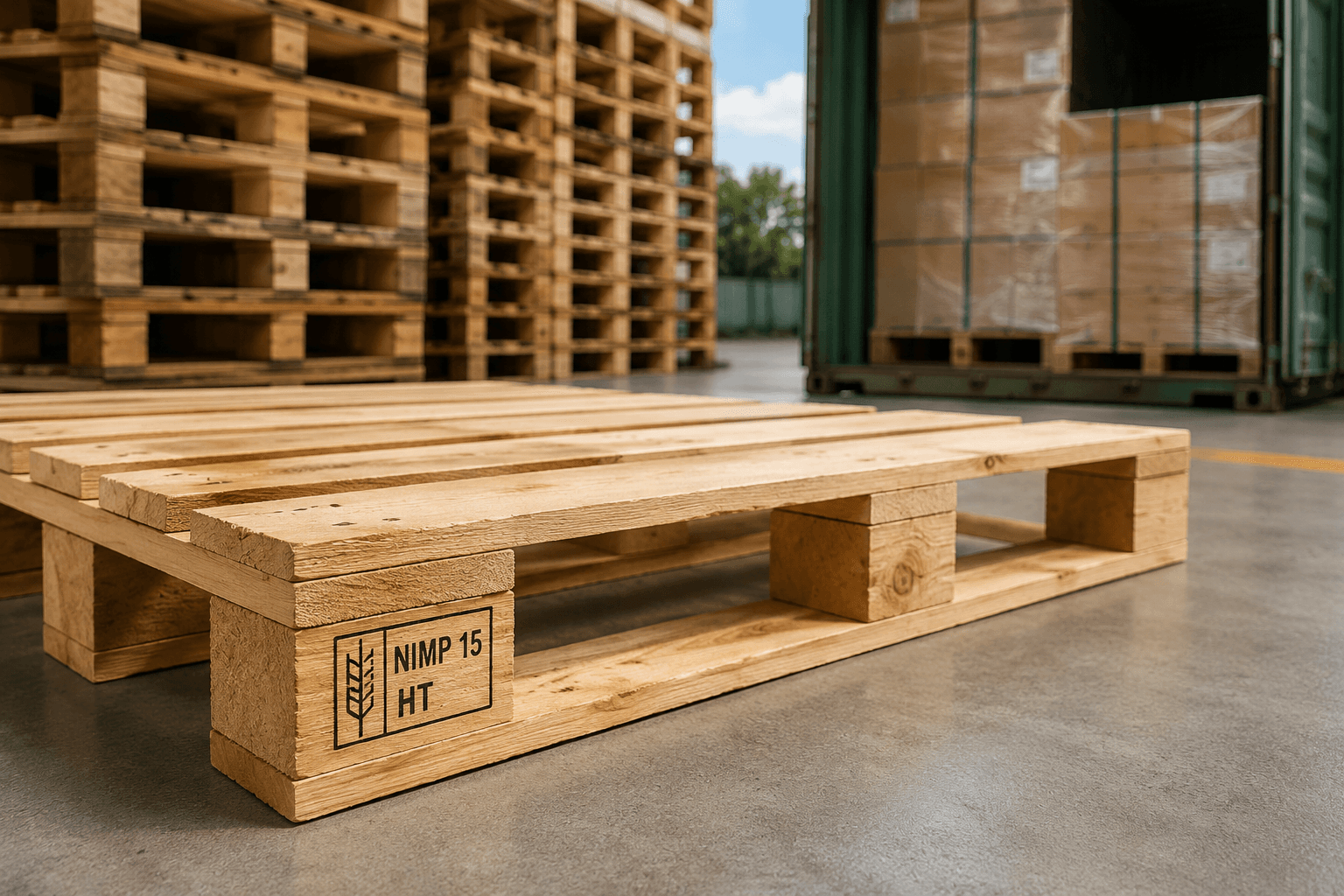
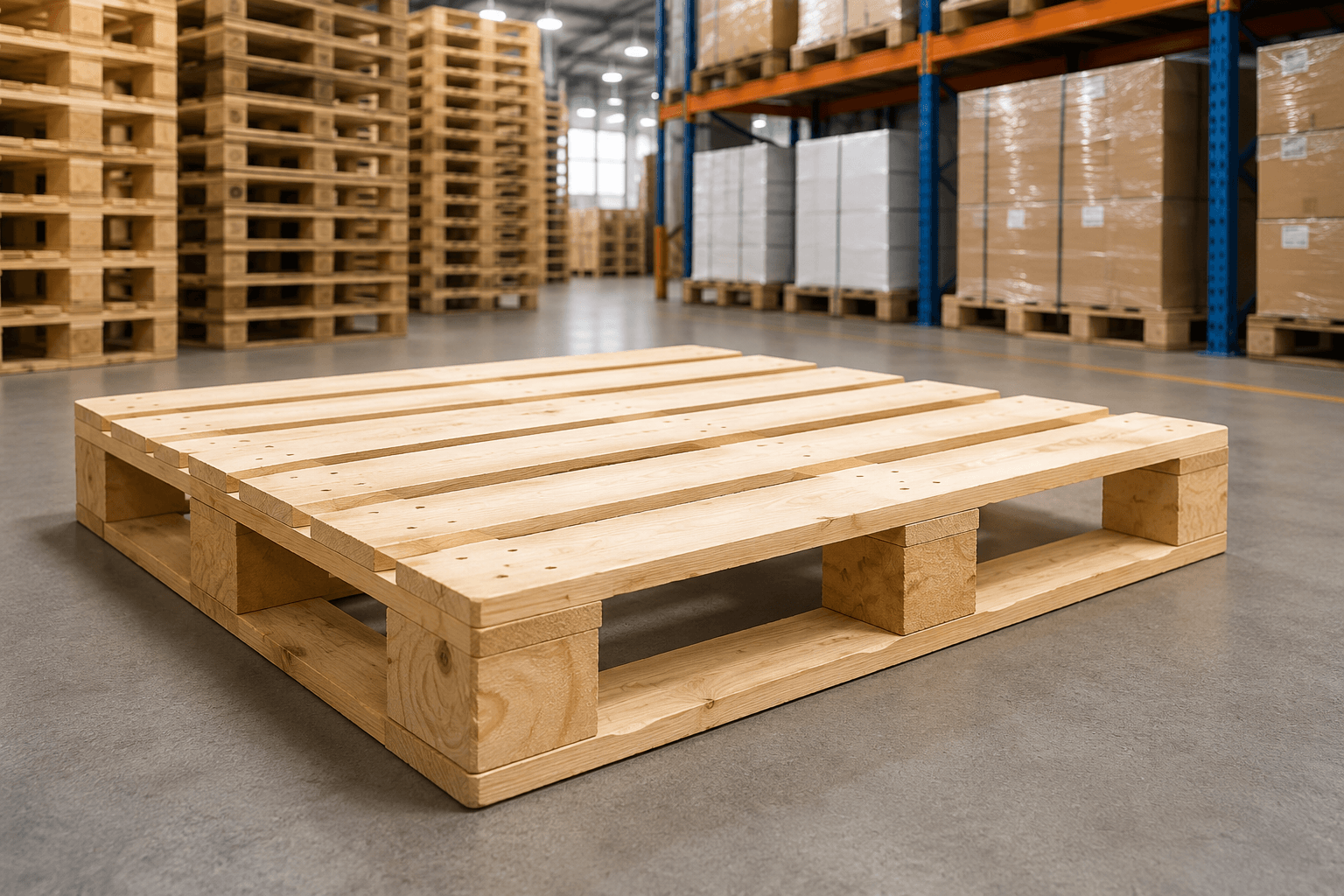
The wood pallet remains the most widespread solution for a simple reason: it is economical to buy, repairable, and available in standard formats (EUR, EPAL) recognized everywhere. For international export, wood treated in compliance with ISPM 15 (ST) is accepted without restriction in almost all markets. It is particularly well suited to construction, heavy industry, and general distribution, where mechanical strength matters more than strict hygiene.
Plastic: hygiene and durability
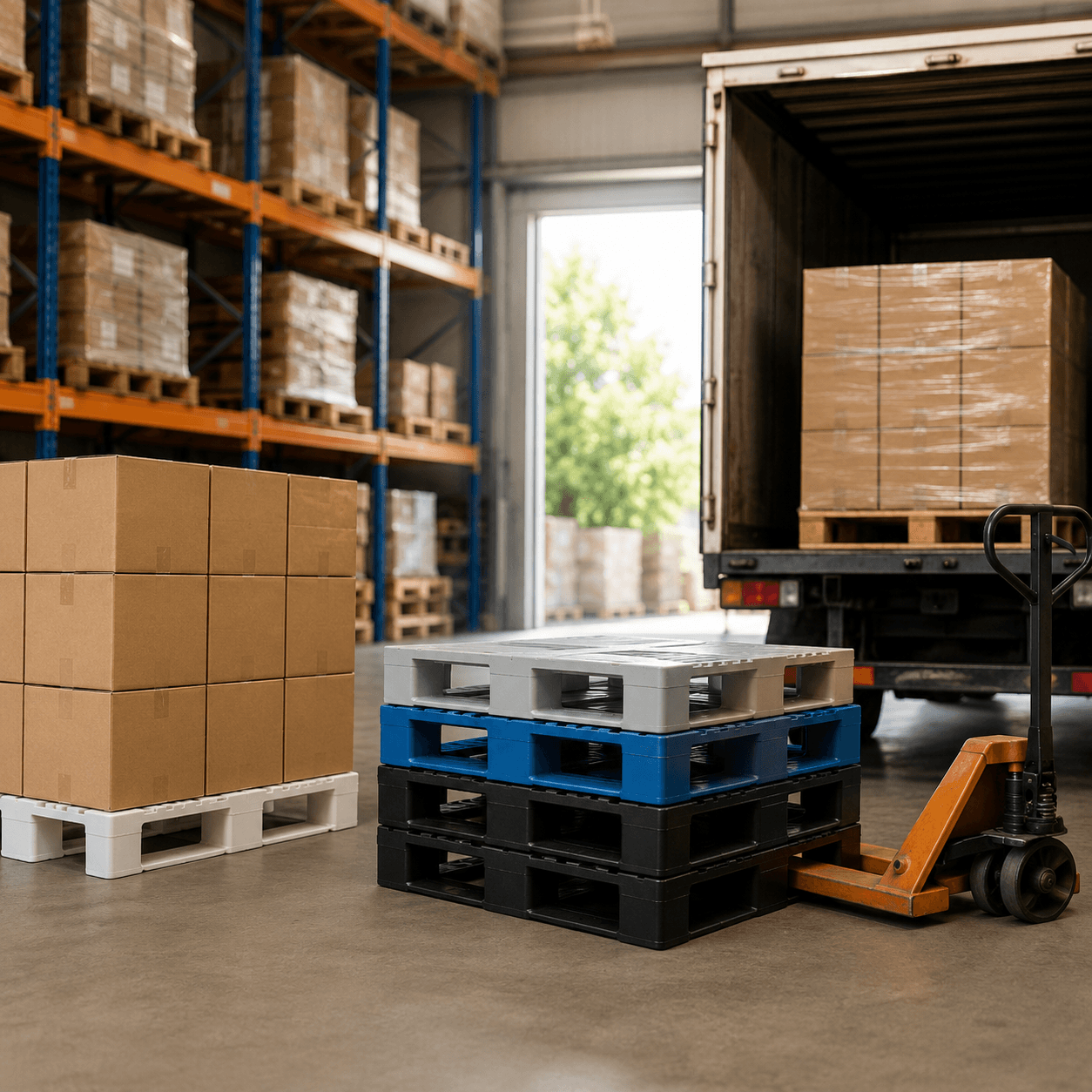
The plastic pallet becomes the obvious choice as soon as hygiene becomes a non-negotiable criterion: food processing, pharmaceuticals, chemicals, cold chain. It retains no dust, no pests, no moisture, and is easy to wash between uses. Its longer lifespan offsets a higher initial purchase cost, especially for companies that run their pallets through many internal logistics cycles rather than using them once.
Quick comparison table
- Initial cost: wood more economical, plastic higher
- Hygiene: plastic superior (washable, non-porous)
- International export: wood treated to ISPM 15 (ST) widely accepted; plastic exempt from phytosanitary treatment
- Lifespan: plastic generally longer over repeated cycles
- Repairability: wood easily repaired; plastic replaced if damaged
Our recommendation
For standard export use or general industrial activity, wood treated to ISPM 15 (ST) remains the most flexible and economical choice. For food processing, pharmaceuticals, or any environment with strict hygiene requirements, plastic is the natural choice. PALIVO offers both ranges and can help guide your choice based on your exact industry.