In the logistics world, not all pallets are created equal. Each industry imposes precise technical, sanitary, and operational standards. The wood pallet then becomes a strategic tool, shaped by very specific business constraints. A poor choice can generate financial losses, regulatory blockages, or even health risks. Conversely, a well-suited selection streamlines flows, secures products, and strengthens the company's credibility with its partners.
Constraints of the food processing industry
The food processing industry operates within an extremely strict regulatory environment. Hygiene is non-negotiable. The wood pallet used must limit the risks of cross-contamination, moisture buildup, or microbial growth.
The wood must be properly dried. A poorly controlled moisture level can encourage the appearance of mold or microscopic fungi. This represents a direct risk to food products, particularly fresh or sensitive items. Pallets must also have a clean surface, free of splinters or cracks that could trap organic residue.
Traceability is also essential. Some supply chains require precise tracking of the wood's origin, the heat treatment applied, and the pallet's life cycle. This requirement is part of a broader approach to food safety and supply chain transparency.
Mechanical strength remains a key criterion. Food industry pallets often undergo intensive logistics cycles: cold rooms, temperature variations, repeated handling. The wood must therefore maintain its structural stability despite these harsh environmental constraints.
Finally, compatibility with automated systems is becoming increasingly important. Food logistics platforms use conveyors and robots that require very precise dimensions and tolerances.
Pharmaceutical and medical sector standards
In the pharmaceutical sector, risk tolerance is almost zero. The wood pallet becomes a critical element of the quality chain. Every detail matters. Absolutely every detail.
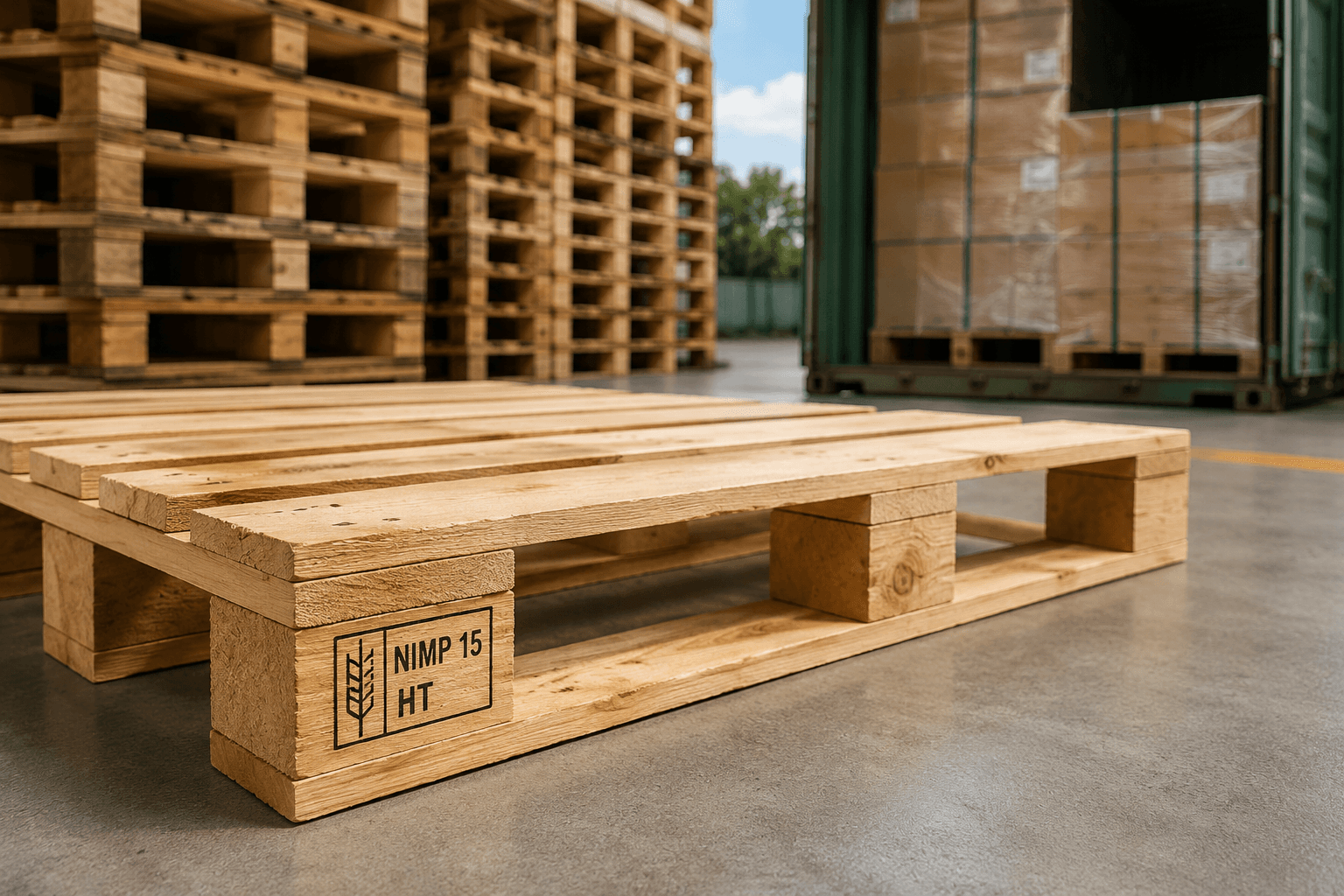
Requirements begin with international regulatory compliance. The ISPM 15 (ST) standard is mandatory for export, but it is not always sufficient. Some laboratories require additional controls: enhanced visual inspections, complete absence of pests, specific supplier certifications.
Pallet cleanliness is fundamental. In some cases, pallets are used in controlled-atmosphere areas. They must be free of dust, bark, or loose particles that could compromise a sterile environment.
Dimensional stability is also crucial. Automated pharmaceutical equipment tolerates very little deviation. A slightly deformed pallet can disrupt an entire robotic production line. The cost of a production stoppage can be enormous.
Medical packaging also requires minimal moisture absorption. A pallet that is too damp can damage certain sensitive packaging or alter product storage conditions.
Documentary traceability, often called upstream and downstream traceability, makes it possible to track the pallet from manufacturing through to its exit from the logistics chain. This requirement is part of quality protocols such as GMP (Good Manufacturing Practices).
Heavy industry needs
Heavy industry imposes a completely different logic. Here, the absolute priority is structural strength. Pallets must support massive loads, sometimes concentrated on very localized areas.
Mechanical stresses are extreme. Industrial machinery, metal parts, bulky technical equipment... The wood must have a density and solidity higher than standard levels. This often means reinforced pallets or custom designs with thick stringers and multi-point decking.
Durability becomes a major economic factor. In this sector, pallets often go through numerous cycles. A fragile pallet would generate high replacement costs and disrupt industrial flows.
Resistance to harsh environments is also essential. Some industrial sites expose pallets to oils, solvents, metal dust, or significant temperature variations. The choice of wood species and assembly method then becomes strategic.
Custom design largely dominates. Standard dimensions do not always suit atypical industrial parts. Manufacturers often have to design pallets tailored to the precise geometry of the loads being transported.
Finally, operator safety remains a priority issue. A faulty industrial pallet can cause serious accidents. Companies therefore favor robust, tested, and certified solutions.