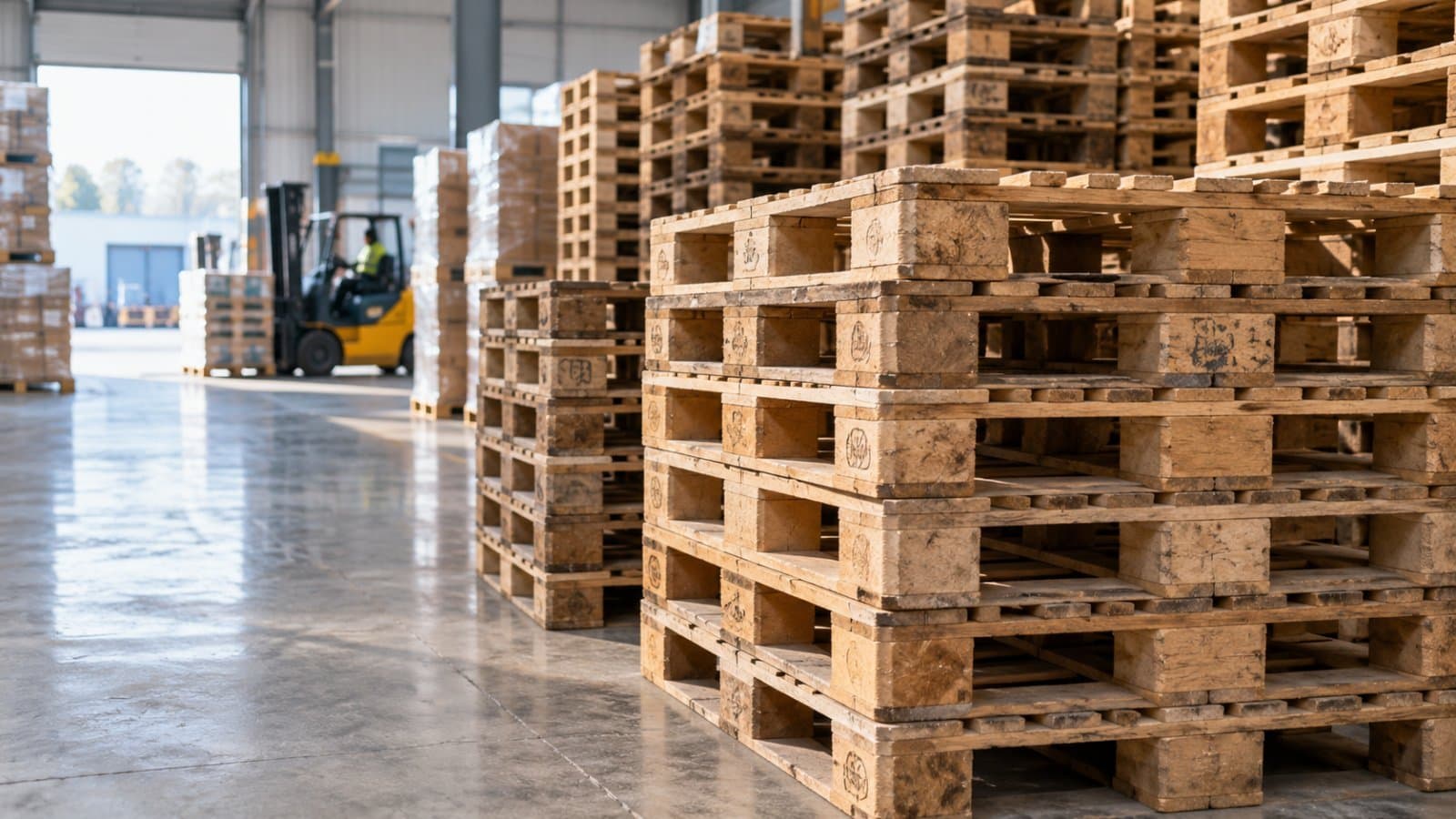
A pallet's load capacity is not a single figure. It changes depending on whether the pallet is moving, resting on the floor or sitting in racking.
Confusing these values causes broken boards and falling packages. Here is how to read and use them.
What is a pallet's load capacity?
A pallet's load capacity is the maximum weight it can carry safely. The manufacturer states it in the technical sheet. EPAL refers to it as the working load.
It includes the goods, the packaging, the stretch film and the strapping.
Dynamic, static, racking: what are the differences?
Dynamic load
This is the weight the pallet can carry while it is being moved with a pallet truck or forklift. It is generally lower than the static load, because it takes shocks and braking into account.
Static load
This is the weight the pallet can carry when stationary on level ground. It applies to floor storage, for example when you stack loaded pallets.
Racking load
In a rack, the pallet rests on two beams. It works differently: it can bend. This load must be checked separately, using the technical sheet and the racking used.
Test methods for flat pallets are described in the ISO 8611-1 standard.
Read the ISO 8611-1 standard on flat pallet testing
What is the load capacity of a PALIVO pallet?
Here are the stated values, in kilograms.
- EUR/EPAL Euro pallet: 1,500 kg working load, 5,500 kg maximum stacking load for the bottom pallet (source: EPAL)
- General-purpose plastic pallet: 1,500 kg dynamic, 5,000 kg static
- Hygienic MR-P pallet: 1,500 kg dynamic, 5,000 kg static
- Hygienic solid 9-foot pallet: 1,000 kg dynamic, 4,000 kg static
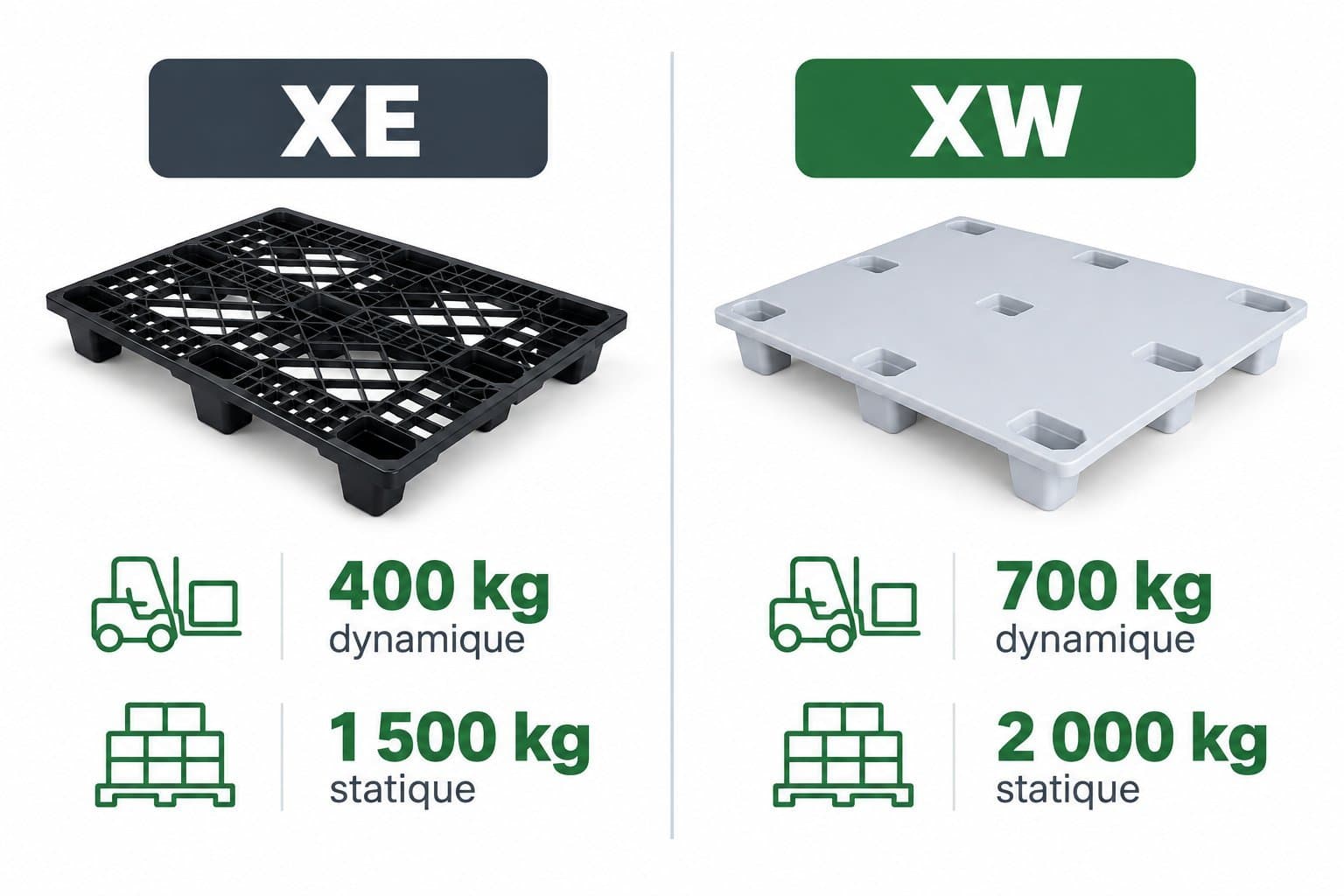
- One-way XE pallet: 400 kg dynamic, 1,500 kg static
- One-way hygienic XW pallet: 700 kg dynamic, 2,000 kg static
Reinforcement with metal bars is available on request for plastic pallets.
How do you calculate a pallet's load?
- Add up the weight of the packages, film and strapping.
- Compare this total with the dynamic load if the pallet is moved.
- Compare it with the static load if pallets are stacked.
- Check the racking if there is any.
- Check the capacity of your pallet truck, for example a 3,000 kg manual pallet truck.
- Keep a safety margin below the stated value.
A load spread over the whole deck is safer than a load concentrated on one point.
When should you choose a reinforced or custom pallet?
If your loads exceed standard values, choose a stronger pallet:
- 1200 x 1000 industrial pallet for heavy industry
- Heavy-duty custom pallet, designed to your dimensions and weight
- Plastic pallet reinforced with metal bars, on request
For heavy industry requirements, read our guide to wooden pallet requirements by industry.
Which load mistakes should you avoid?
- Confusing static and dynamic load
- Forgetting the weight of packaging and film
- Concentrating the load on one point
- Putting pallets in racking without checking
- Using a damaged pallet at full load
Find good practices in our guide on load distribution.
FAQ
What is the difference between dynamic and static load?
Dynamic load applies when the pallet is moving. Static load applies when it is stationary on the floor.
What load can an EUR EPAL pallet carry?
EPAL states a working load of 1,500 kg and a maximum stacking load of 5,500 kg for the bottom pallet.
What load can a PALIVO plastic pallet carry?
The general-purpose model carries 1,500 kg dynamic and 5,000 kg static. One-way models are lighter.
Can the static load be used for racking?
No, not without checking. The pallet rests on two beams: ask for the technical sheet.
What should you do for very heavy loads?
Choose an industrial pallet or a heavy-duty custom pallet, or ask for metal reinforcement on plastic pallets.
Does a damaged pallet keep its stated load capacity?
No. A split board or a broken block reduces strength: take the pallet out of circulation.
Conclusion
A pallet's load capacity is read as three values: dynamic, static and racking. Compare each one with your actual use, with a margin. Send us your weights and formats and we will suggest the right pallet.